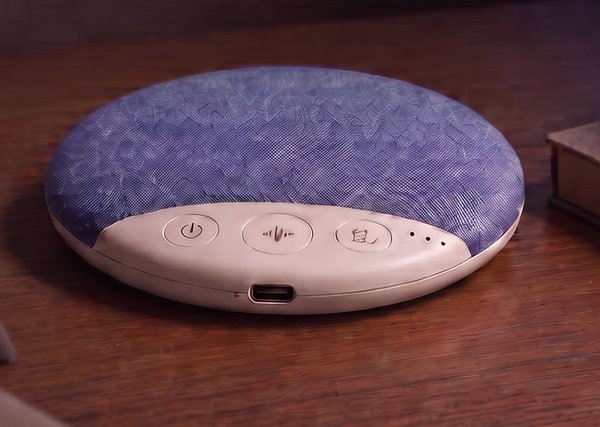
The reason your sound machine wakes the other kid has nothing to do with volume 👇
A sound engineer would call it physics. I just called it every night of my life, until I moved the sound.

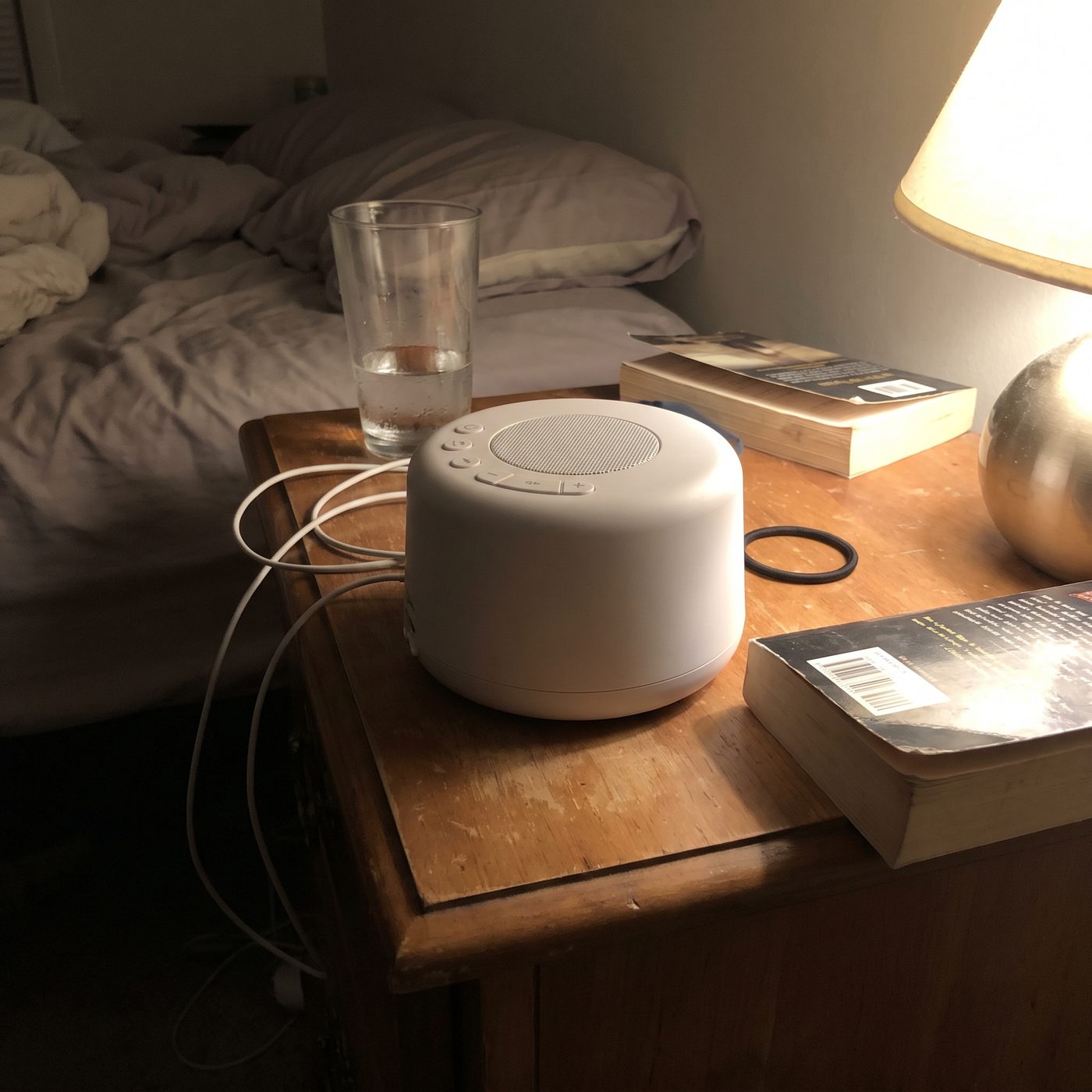
Both doors closed. For years, that was luck, not a given.
Both doors closed. The house finally quiet. If you know, you know.
I've got two kids who cannot share a bedtime routine. One of them needs sound to fall asleep, some kind of noise in the room or she just lies there awake, listening to the house. The other one can't sleep with any noise at all. A hum, a voice, a wave sound drifting under the door, and she's up, calling out, wide awake.
For a long time I thought that was just my life. Just the hand I got dealt. Two kids, one house, opposite wiring, and me in the middle every single night trying to make both of them happy at once without waking either one up.
If you've got one kid who needs sound and another who needs silence, and you're the one absorbing the difference every night, give me the next few minutes. This is the thing nobody explained to me, and it changed the whole fight.
One kid needs sound. One needs silence. You're the one stuck in the middle.
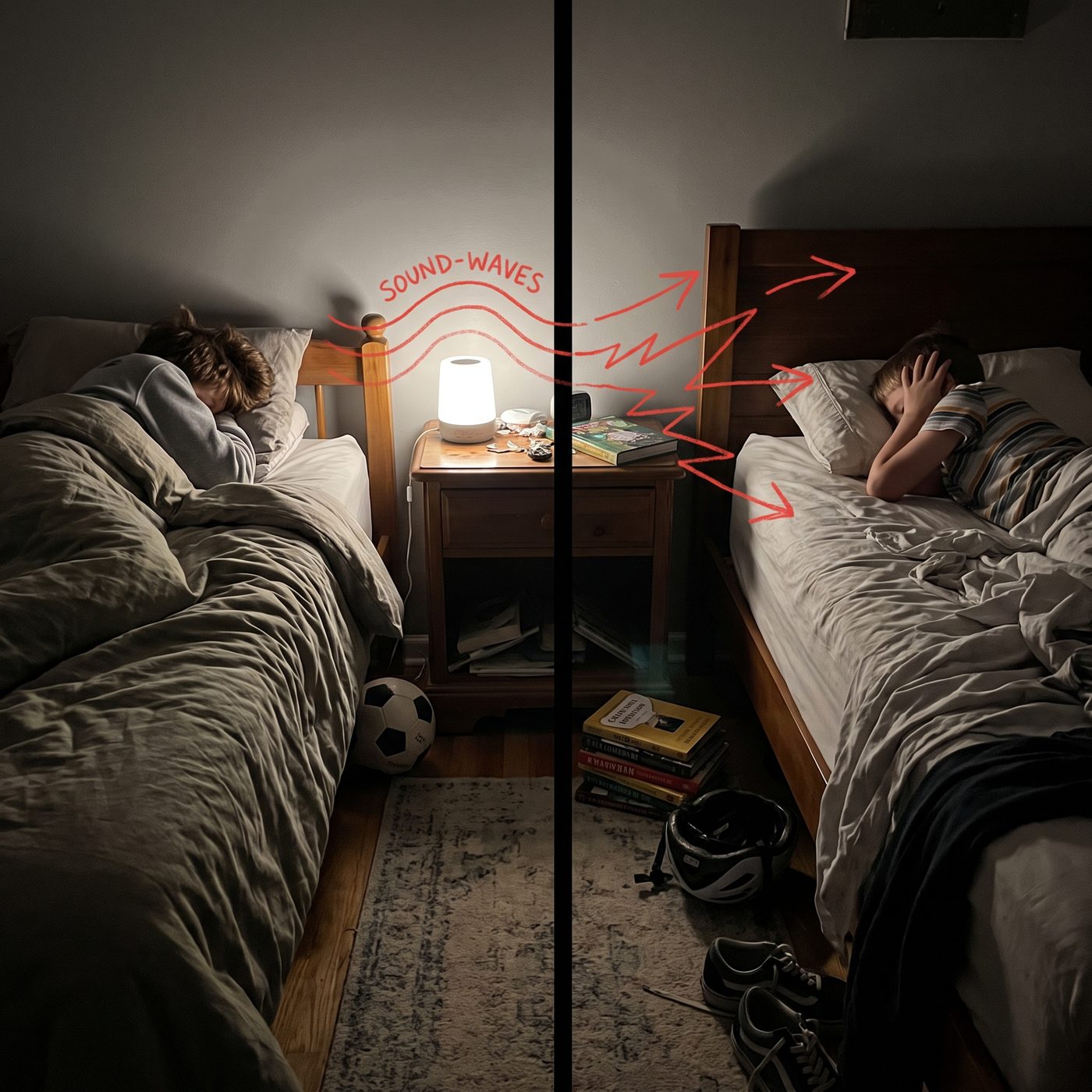
Let me see if this sounds familiar.
You put something on for the kid who needs it. White noise, a story, a wave sound, whatever works. And for about ten minutes, it's fine. Then the other one starts. "It's too loud." "I can't sleep."
So you turn it down. Now it's quiet enough for the second kid, but the first kid can't hear it anymore, and she's the one who needs it, so now she's restless. So you creep back in and nudge it up. And the second kid stirs again.
There's no setting that works. You've tried them all. You've stood in that doorway at 8:40 at night, thumbing the volume up and down by single notches, trying to find the one magic level that keeps one kid asleep and the other one soothed, and it does not exist. You know it doesn't exist because you've been hunting for it for months.
And the worst part isn't even the fiddling. It's the feeling that someone in that room is always losing. One kid gets what she needs and the other one pays for it. Every night. And you're the one who has to choose which kid pays.
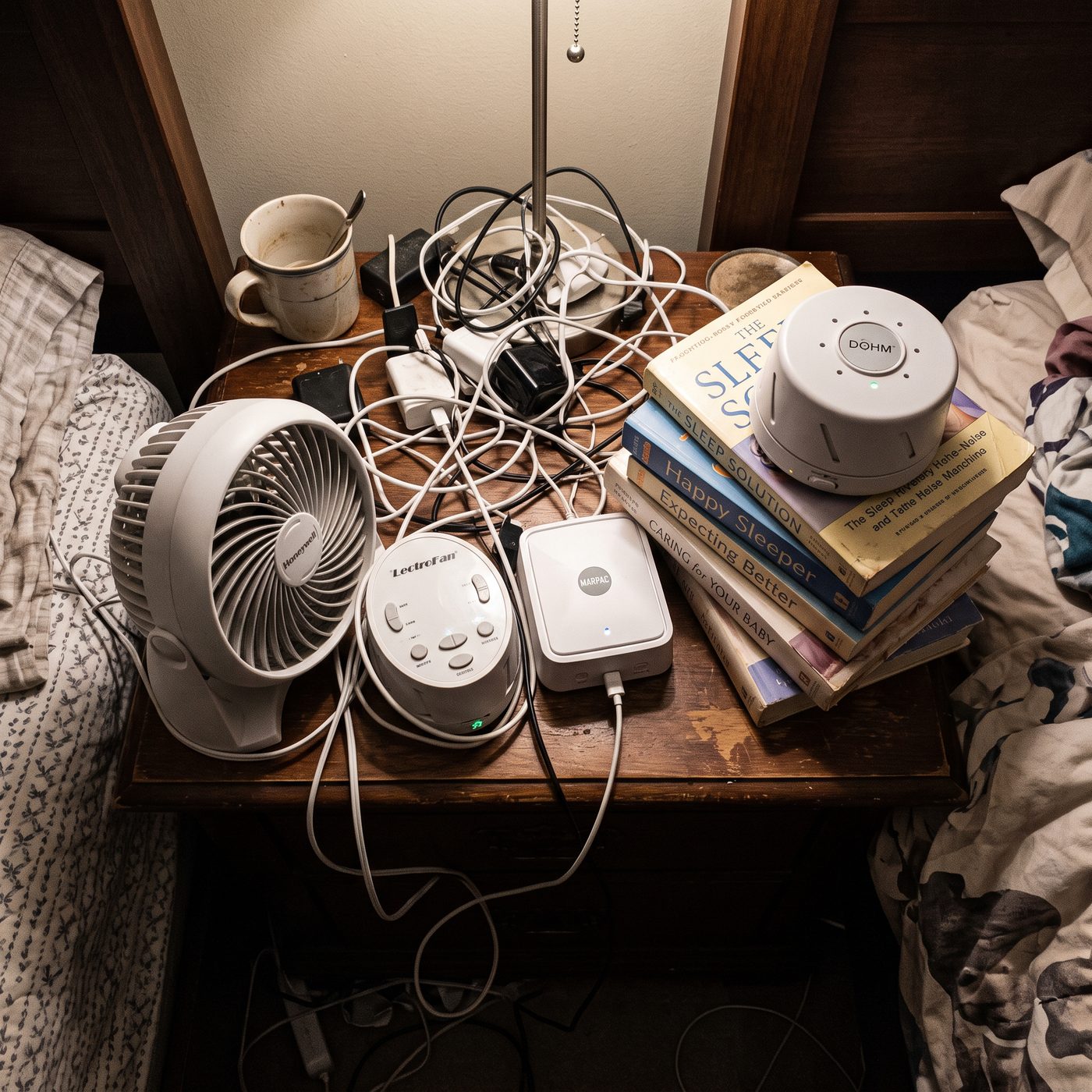
I got creative. I ran two sound machines at once, thinking I could cancel the problem out, and created the worst wall of noise I've ever heard come out of a bedroom. I tried timing it: sound on low, wait until one's asleep, then commando-crawl across the floor to shut it off before the other one heard the click. I did that for weeks. I tried moving beds, swapping fans for machines, putting the speaker high, low, near the wall, far from it.
Every single fix solved one thing and broke another. Quieter for one meant worse for the other. There was no version where everybody in that room got what they needed on the same night. Somebody always lost, and most nights the person who lost the most was me, standing in a hallway at 9pm, having given up my own evening again.
I thought I was just bad at bedtime. Then I found out it wasn't me at all.
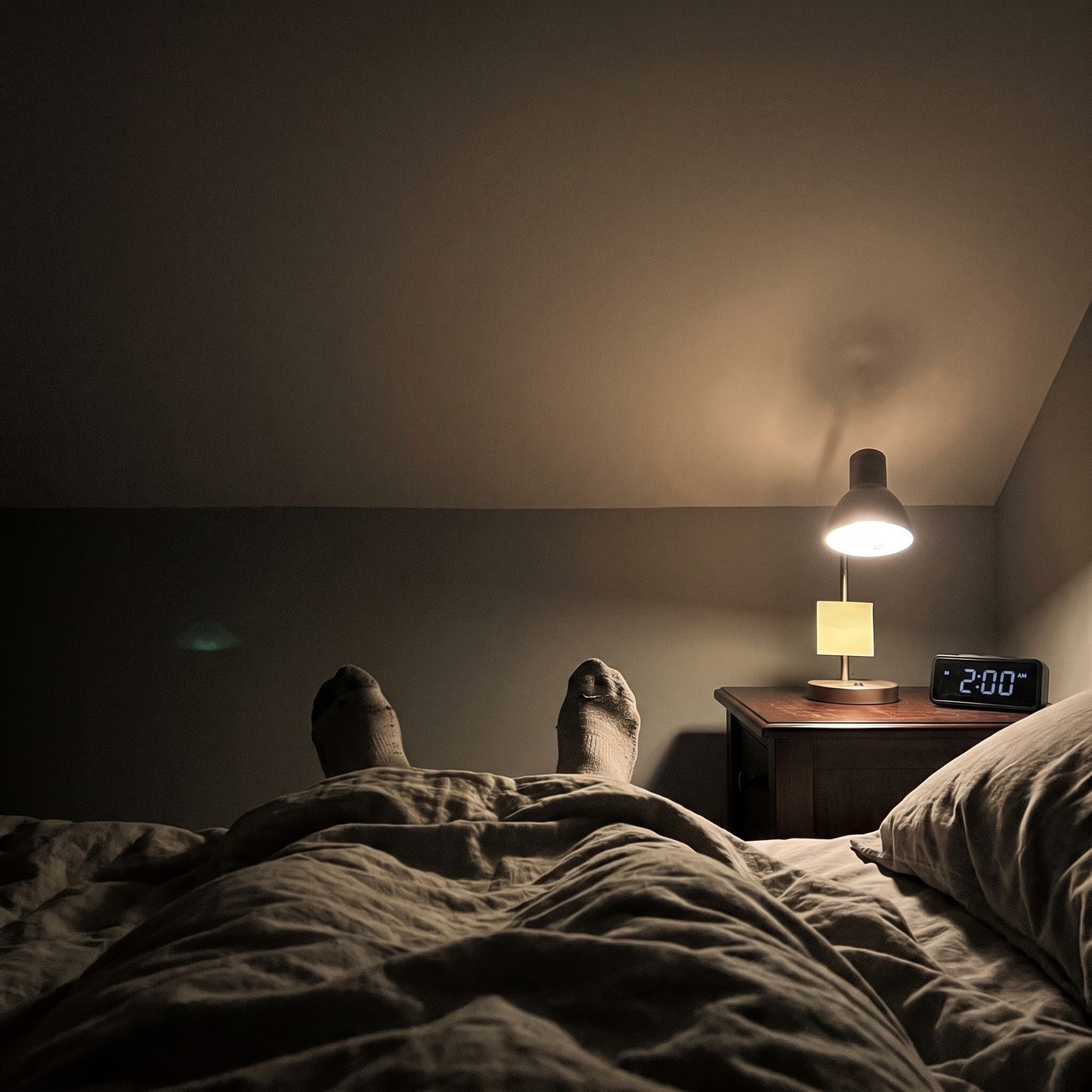
Here's the thought that lived in my head for about two years: I'm just wrong. One hundred percent of the time, whatever I pick, I'm wrong.
And when you feel that way, you start bracing for the advice. Somebody hears you're struggling and their face lights up: "Have you tried a routine? Have you tried white noise? Have you tried an earlier bedtime?"
You don't think I've tried everything to get them to sleep?
I had tried everything. Every tip the internet throws at you. Every trick another parent swears by. I wasn't a parent who hadn't done the work. I was a parent who had done all of the work and was still losing, which is a very specific, very lonely kind of tired.
Then one night, instead of hunting for another routine, I went looking for why nothing was working. And what I found reframed the entire fight. It wasn't a discipline thing. It wasn't a content thing. It wasn't a me thing.
It was where the sound was going.
Nobody told me the real problem was where the sound was going.
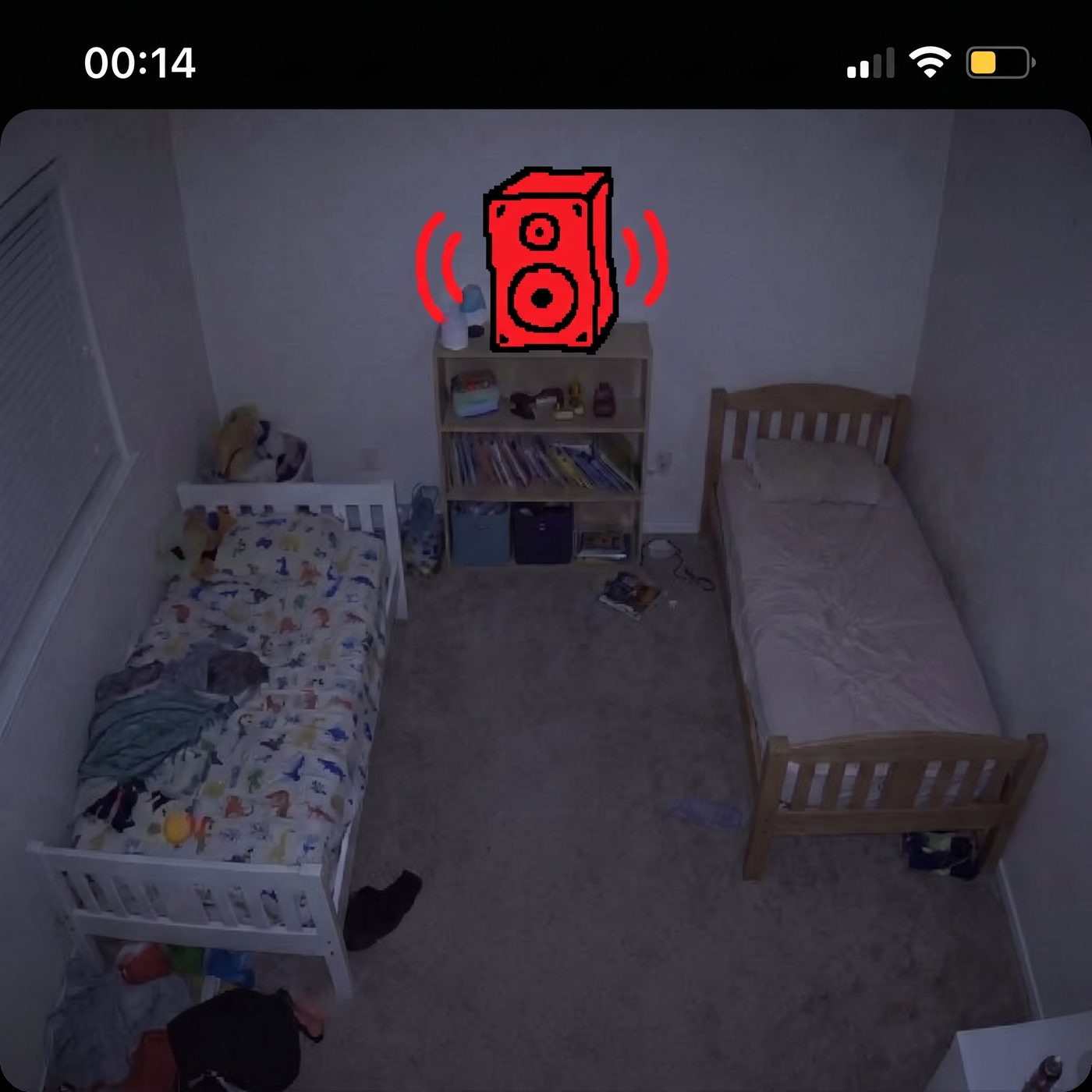
Here's the thing that finally broke it open.
Every speaker, every sound machine, every story player, they all do the exact same thing. They fill the room. All of it. The whole volume of air in that bedroom. That's the only way they work.
Which means the second you turn one on, both kids are getting it. Whether they want it or not. The sound doesn't know which kid asked for it. It just floods the space and reaches everyone in it equally.
Sit with that, because it reframes everything. The problem was never what I was playing, I could've swapped white noise for waves for a lullaby a hundred times and changed nothing. The problem was never the routine either. The problem was that I was putting sound into a room with one kid who wanted it and one kid who didn't, using a device whose entire job is to make sure everyone in the room hears the same thing.
That's not a content problem. That's not a routine problem. That's a delivery problem. And you cannot fix a delivery problem by changing the playlist.
Why no volume setting works for both kids, and physics explains it.
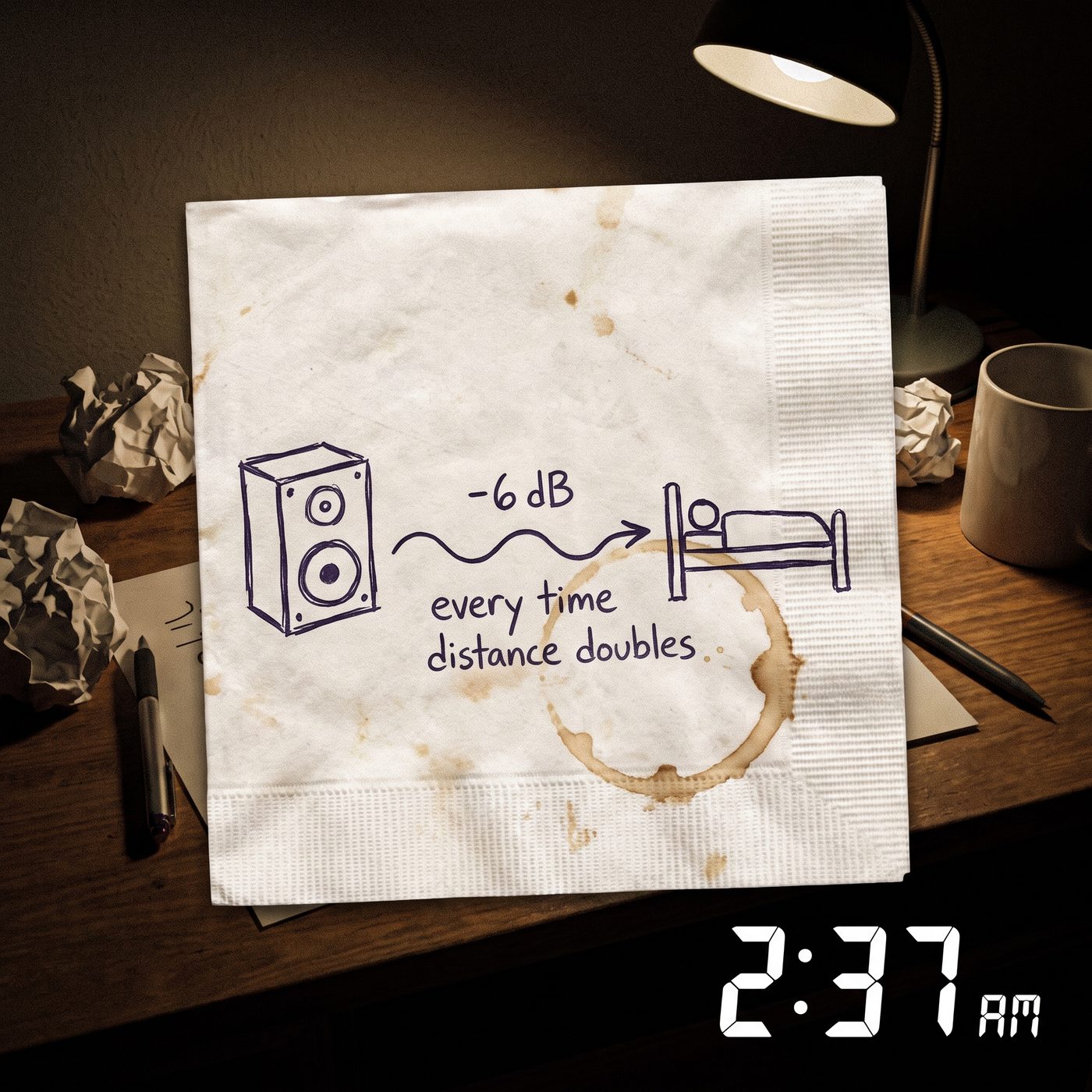
This is the part I actually went and researched, because I'm the kind of tired person who, at midnight, will go read about acoustics rather than sleep.
There's a principle called the inverse-square law. In plain terms: every time you double the distance between a sound source and a listener, the sound's intensity drops by about 6 decibels. That doesn't sound like much until you picture your actual bedroom.
A speaker on a shelf is maybe six feet from your child's head. For the sound to reach her clearly, clearly enough to actually soothe her, it has to push all the way across that distance, losing intensity the whole way. So what do you do? You turn it up. You have to, or the kid who needs it can't hear it.
But now that it's loud enough to cross the room and reach the first kid, it's also loud enough to reach everything else in that room. The other bed. The wall. The gap under the door. The second kid, who needed silence, is now getting a speaker cranked loud enough to carry six feet.
That's the whole trap. A room speaker can only reach one child clearly by filling the entire room first. It has no other mode. So turn it down, the kid who needs sound loses it. Turn it up, the kid who needs quiet loses it. There is no middle number. I spent months looking for a setting that is physically impossible.
And that's why every workaround died on arrival. Here's every tool I tried, lined up against the one thing my house actually needs:
| Room speaker | White-noise machine | Story player | Phone / tablet | Under the pillow | |
|---|---|---|---|---|---|
| Reaches the one kid who needs sound | ✓ | ✓ | ✓ | ✓ | ✓ |
| Doesn't fill the whole room | ✕ | ✕ | ✕ | ✕ | ✓ |
| Other kid can sleep through it † | ✕ | ✕ | ✕ | ✕ | ✓ |
| No glowing screen left in the room | ✓ | ✓ | ✓ | ✕ | ✓ |
| Nothing to manage after you press play | ✓ | ✓ | ✕ | ✕ | ✓ |
† Based on our own in-home test, varies by room size and pillow type. Not a guarantee for every home.
Every one failed for the identical reason: they were all still adjusting a room-filling speaker. You can't adjust your way out of the fundamental design.
I didn't need a better setting. I needed the sound to stop coming from across the room.
What finally fixed it wasn't a new sound. It was a new place to put it.
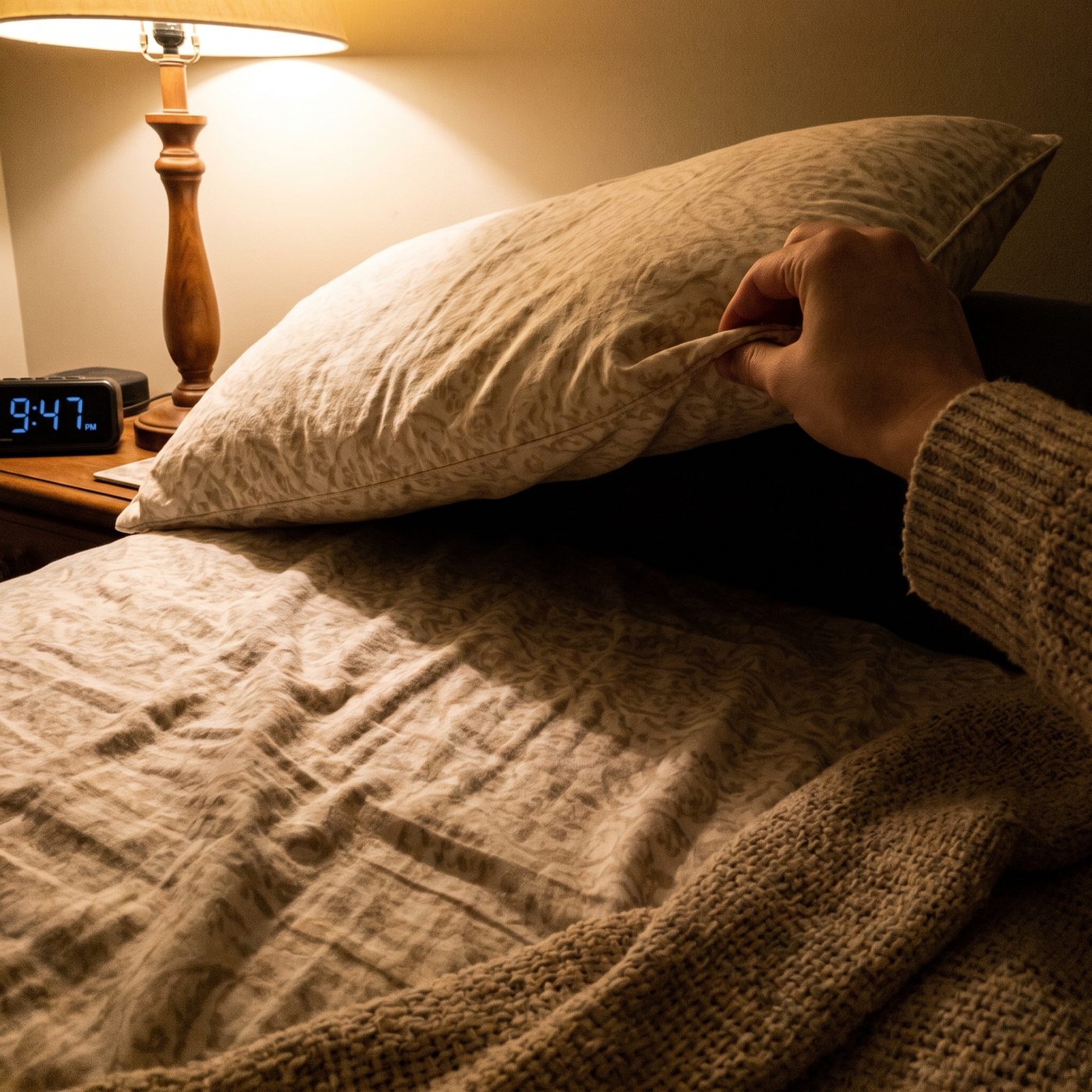
So here's the shift, and it's almost stupidly simple once you see it.
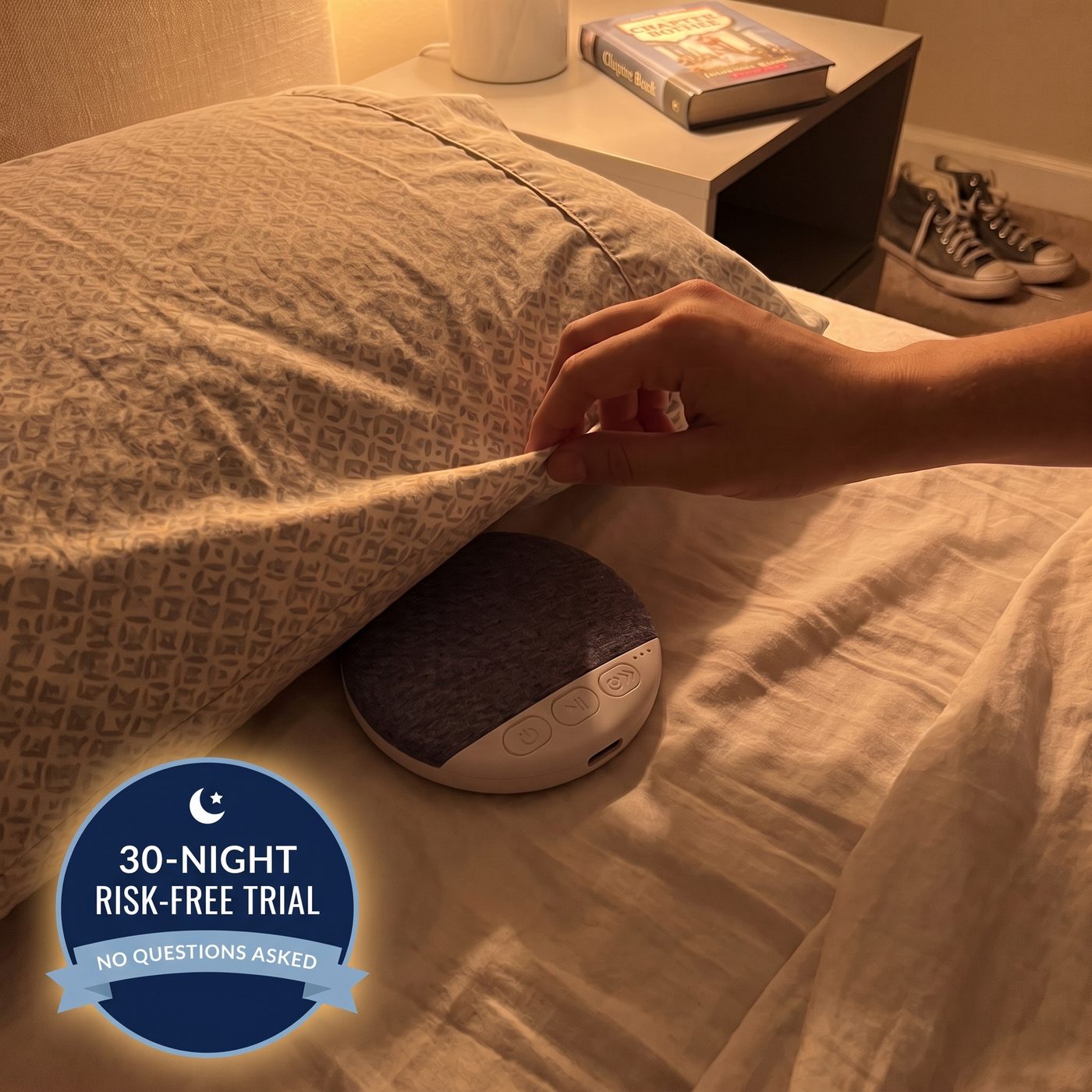
Instead of putting the sound source across the room and cranking it up to reach my child, I moved the source to my child. Under her pillow.
The sound comes up through the pillow, right next to her ear. It doesn't have to cross the room, so it doesn't have to be loud enough to cross the room. It's already there. And because it never has to flood the space to reach her, it never reaches the other bed. The sound is happening two inches from one child's ear at a volume that suits her, and it simply never travels far enough to touch the kid four feet away.
Same story, same white noise, same everything the kid actually hears, just coming from a completely different place. Not filling the room. Not broadcasting outward. Just sitting right where the one child who wants it already is.
The problem was where the sound was going. So we changed where the sound comes from. That's the entire fix I couldn't find for two years, because I kept staring at the volume dial instead of the location.
"Won't it sound muffled through the pillow?" It doesn't, but it does sound different, on purpose.
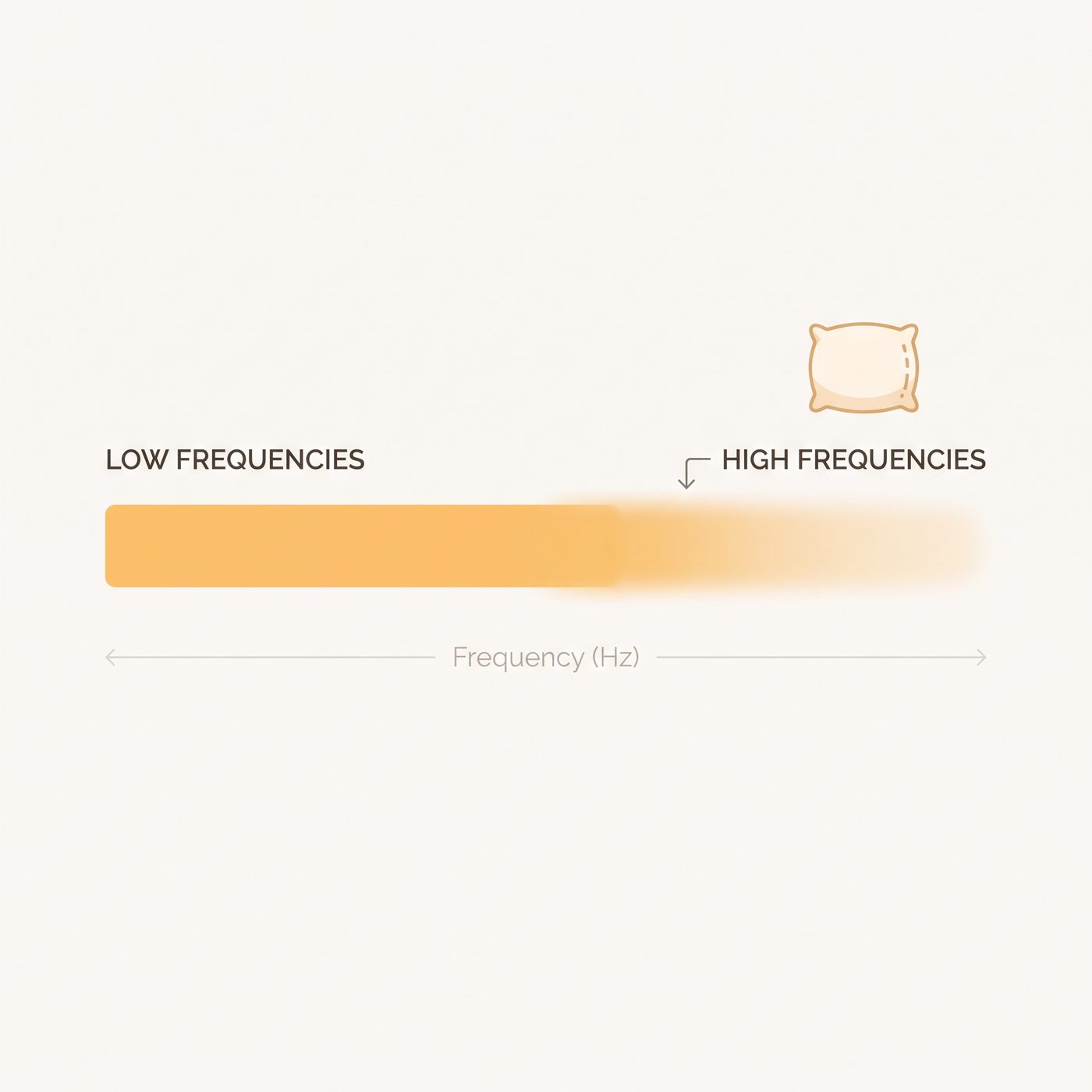
Now, the first thing most parents ask, the first thing I asked, is whether it sounds muffled coming up through a pillow. It doesn't. But it does sound different than a speaker out in the open, and here's why that difference turned out to be the whole point.
A pillow doesn't muffle sound evenly. It takes the top off. The high, bright, crisp frequencies drop away faster than the low, warm ones. Roughly the stuff above 1,000Hz or so, though where exactly that line falls depends on your pillow, of course; a thick memory-foam one takes more off the top than a thin cotton one.
And those bright high frequencies are exactly the part of a sound your brain leans on to stay alert. They're the crisp, attention-grabbing part. The pillow softens them on its own, without you touching a setting. So what came through for us was lower, warmer, calmer than the same sound out of a shelf speaker, not degraded, just gentler. The sonic equivalent of dimming the lights. Which, at bedtime, is exactly what you want.
I sat right next to my other child with it playing. I heard nothing.
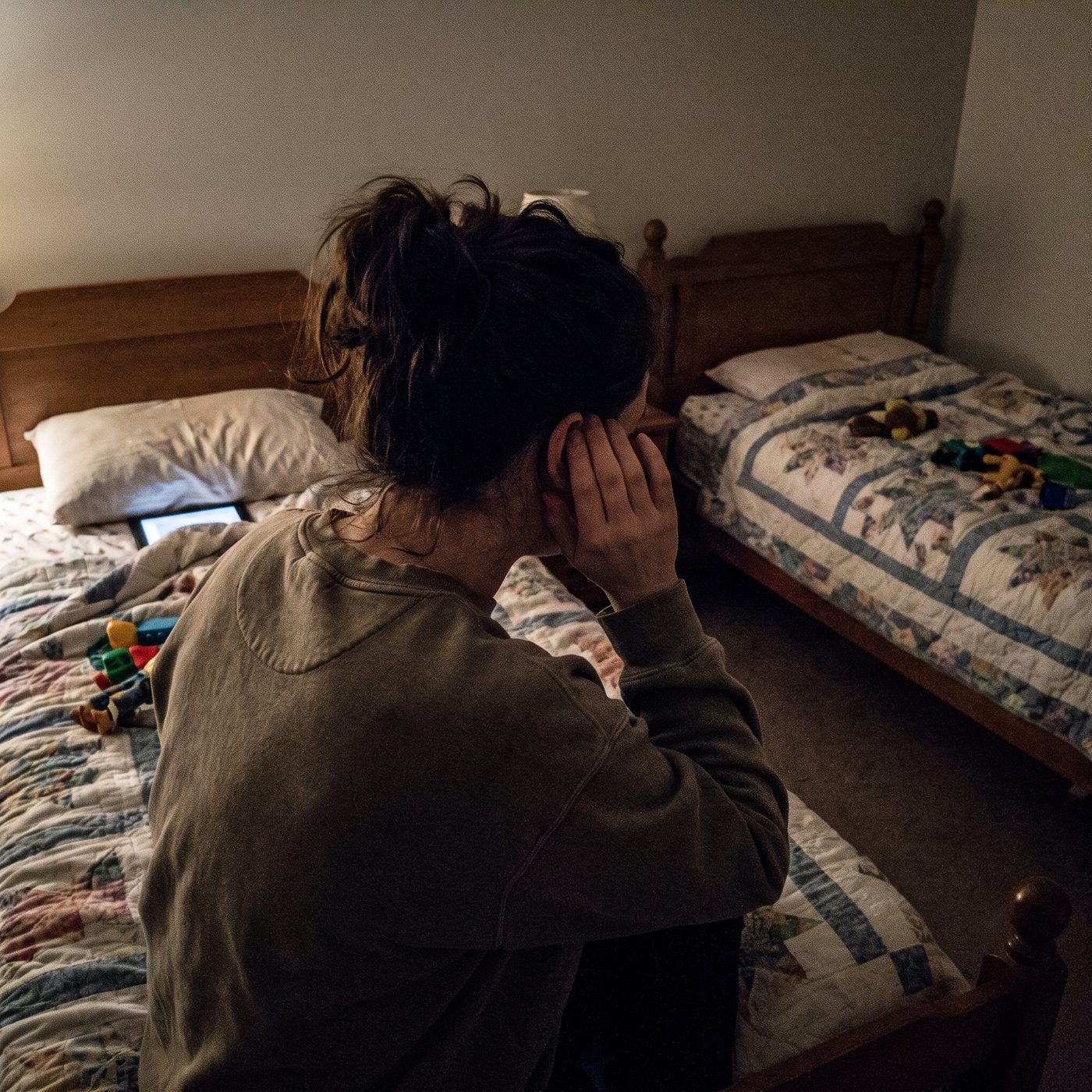
I didn't take any of this on faith. I tested it, because I'd been burned by enough "solutions" to be a skeptic.
The night I set it up, I put it under my daughter's pillow, got her sound going at the level she likes, and went and sat on my other daughter's bed. A few feet away, where the kid who needs silence sleeps.
I heard nothing. Not "a little." Not "faintly." From that second bed, with her sister's sound playing the way she likes it, I could not hear it. I sat there longer than I needed to, just to be sure I wasn't fooling myself. Nothing.
I'll be straight with you, because I'm done with marketing that overpromises: that was my room, my pillows, at my kids' volume. Your room is different. I can't sit in your house and tell you what you'll hear from across it. What I can tell you is why it works, the sound never has to cross the room, so there's nothing to cross the room and reach the other bed. In my house, on my test, the second kid genuinely could not hear it. That was the night the two-year fight ended.
The fix was a speaker that doesn't sit in the room at all.
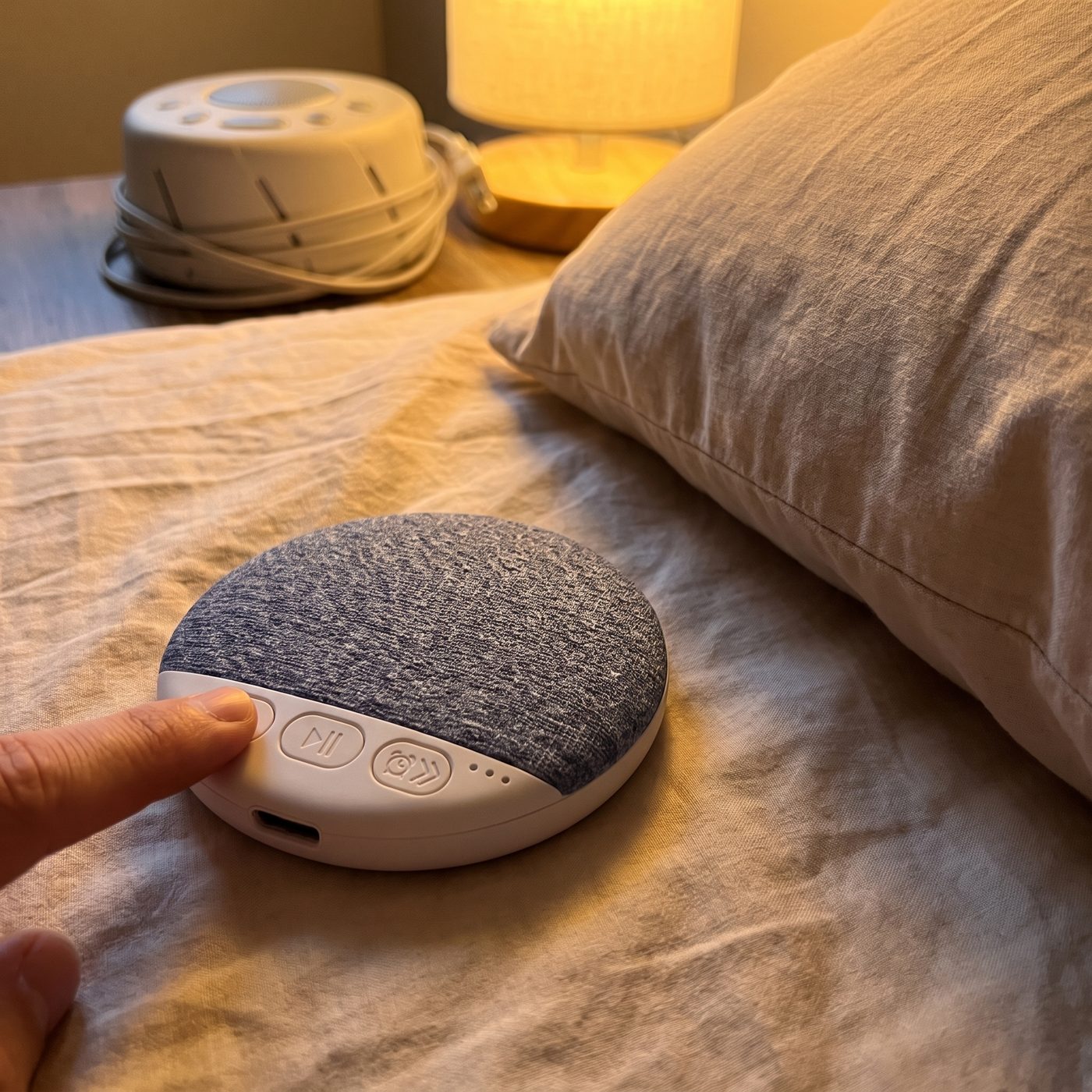
The one we ended up with is called Soluvia. It's the thin under-pillow speaker I've been describing.
Here's what won me over, and it's the opposite of what I expected to care about. It has three sounds built right into it, a wave-style white noise, a forest stream, and birdsong. And to use those, I need exactly nothing else. No phone. No app. No pairing. No screen anywhere in the room. No account, no downloads, no content to manage.
One button. That's the entire operation.
Here's how it actually kills the problem at the root.
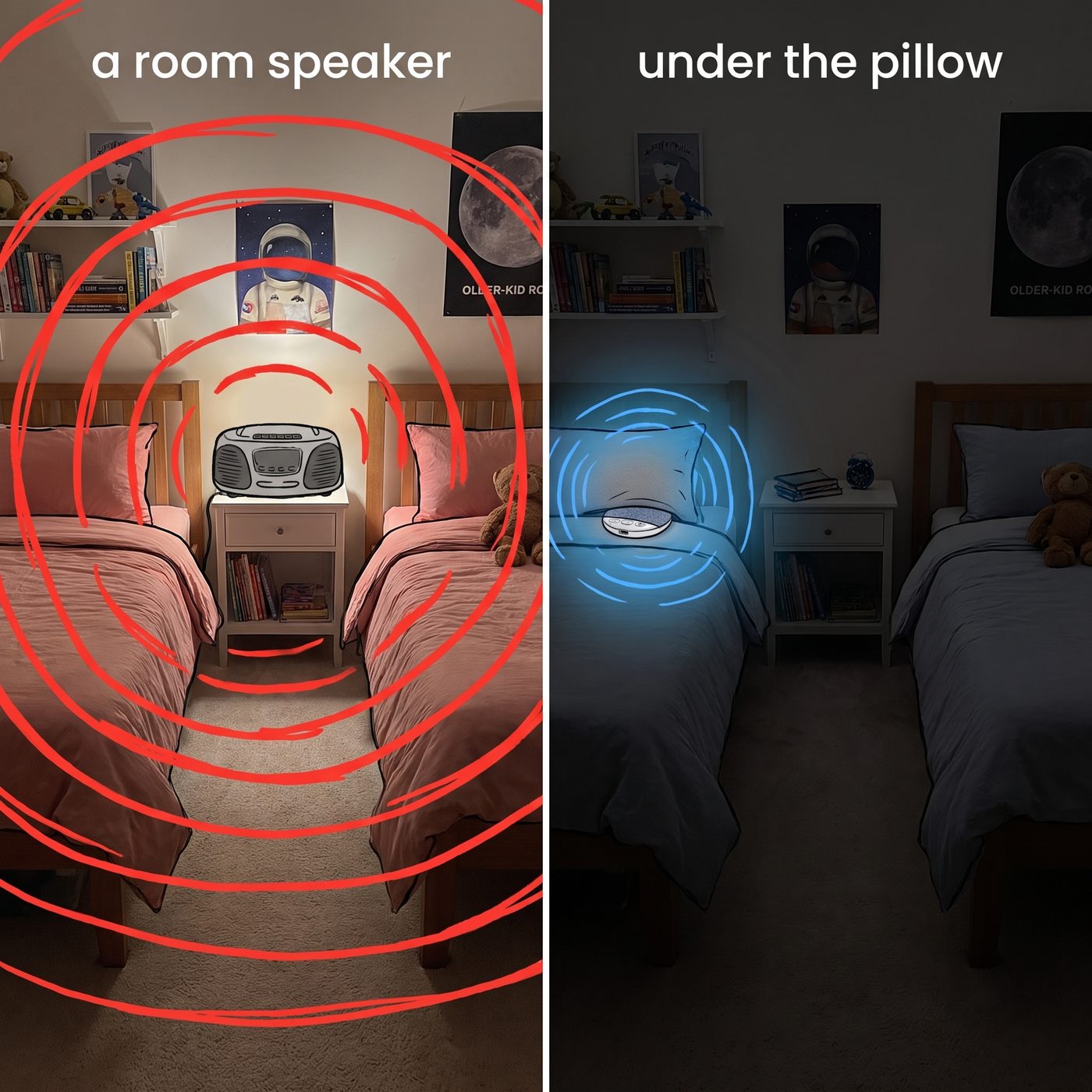
Go back to the root cause for a second, because this is where it all connects.
The reason nothing worked was where the sound came from, a source across the room that had to flood the whole space to reach one kid. Every fix I tried left that root cause untouched. I was adjusting volume, swapping content, moving beds, all downstream of the real problem, which was the location of the source.
Soluvia doesn't adjust the problem. It removes it. By moving the source to under the one pillow that wants it, the sound never has to cross the room in the first place, so it never reaches the other bed, because there's nothing to reach it. The exact mechanism that was breaking bedtime (a room-filling source) is the exact thing it eliminates (a source that doesn't fill the room at all).
On the nights my daughter just needs sound to settle, most nights, I press one button, the sound comes up through her pillow, and I walk out. No phone in the room. No glowing anything. Just a calm sound, coming from under one pillow, going nowhere else. My other daughter, across the room, gets her silence, because there's nothing crossing the room to take it from her. Both kids, same room, opposite needs, both handled, at the same time, without me choosing who loses.
My oldest asks for it every night now. That used to make me nervous, the "I don't want them dependent on it" fear. But there's a difference between a kid depending on me to be the human volume knob every night, and a kid depending on a one-button sound she can have without me hovering. One traps me in the doorway. The other gives me my evening back.
And on the nights she wants a story instead of just sound, there's a second mode, it connects to my phone, I start the audiobook, and it shuts itself off on its own with a built-in timer. I start it and I leave. I'm not the night manager anymore.
I'm not the only one who found this.
Real parents, in their own words. Here's what changed for them.
The three things every parent asks me before they try it.
"Will it really not be muffled through the pillow?" No, covered above. It sounds different, softer on the high end, but that softness works for you at bedtime. The low, warm, calming body of the sound comes through fine.
"Will my other kid actually not hear it?" In my house, tested from the second bed, genuinely no. It works structurally: the sound never crosses the room. Your room and pillows differ from mine, which is exactly why the only test that matters is the one in your own house, across your own room. That's what the trial is for.
"Is my kid the right age for this?" If your child is around 5 or older, yes, old enough to have something rest under the pillow without fussing with it. Younger than that, I'd be honest and say this probably isn't your tool yet.
It didn't fix everything about bedtime. Here's what it actually fixed.
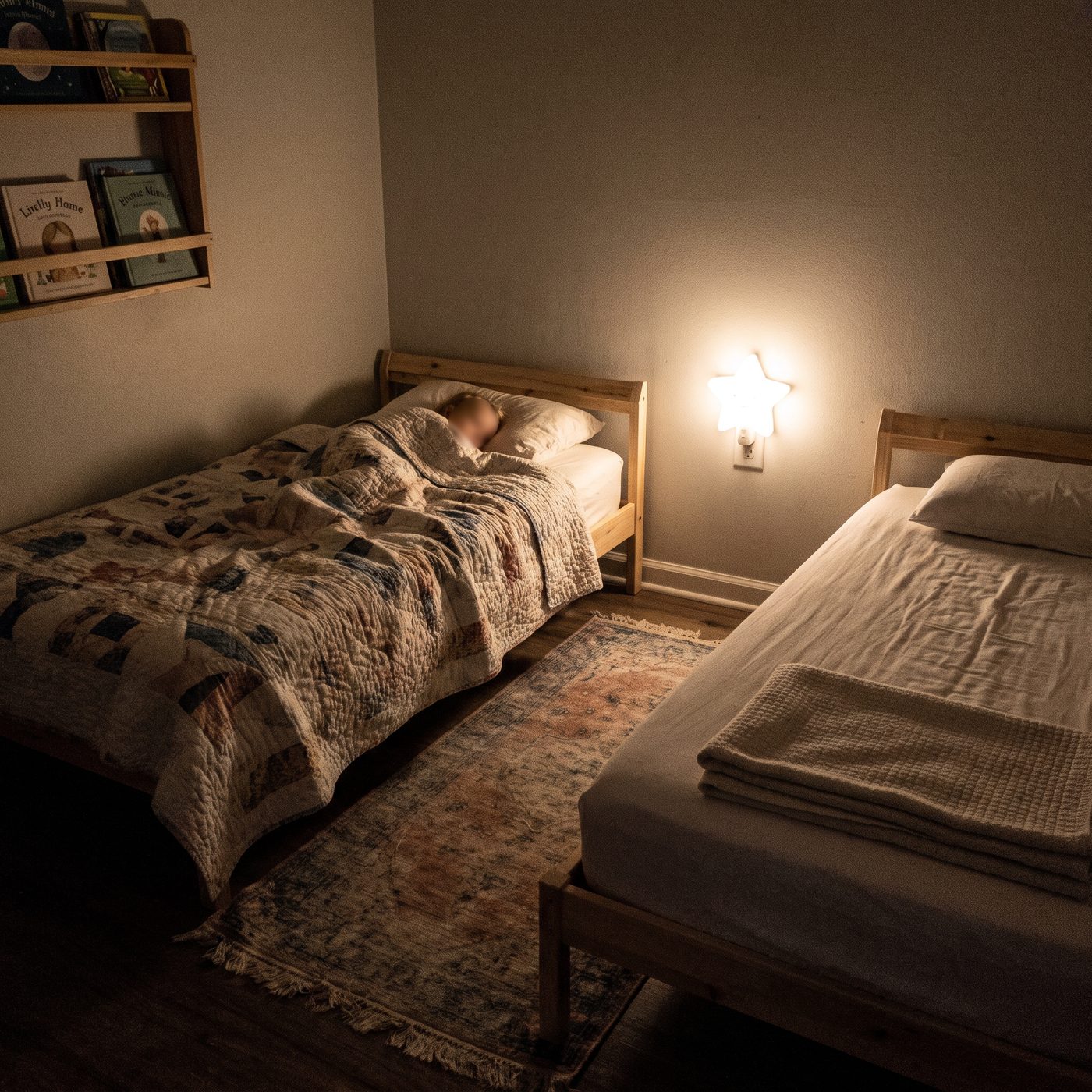
I'm not going to tell you this fixed everything about bedtime, because it didn't. My kids are still my kids. There are still bad dreams and one-more-hugs and the occasional 2am. Bedtime is still bedtime, and anyone who tells you a speaker changes that is selling you something.
What it fixed was one specific, exhausting, nightly thing: the fight over sound is just gone. That particular negotiation, one kid needs noise, one needs quiet, and I'm in the middle absorbing the difference, doesn't happen anymore. Not better. Not improved. Over.
That's the whole promise. Not fewer wakeups. Not solved bedtime. Just: the one specific war I was fighting every night, over where the sound goes, is finished. For me, that one thing was worth everything.
A quick, honest note on why it's half price right now.
Since someone always asks: this is still a fairly new product. Most parents have never heard of putting the speaker under the pillow instead of across the room, it's not a category people know to look for yet.
So right now they're running an introductory half-off price and gathering honest reviews from the first wave of families using it. That's the whole reason it's discounted and the whole reason the trial is risk-free. They'd rather get it into your house, let it prove itself across your own room, and earn the review than talk you into it. If it doesn't do what I've described, you send it back. Simple.
Your guarantee: 30 nights, and the risk is ours.

It comes with a 30-night risk-free trial. Try it in your own house for a month, across your own room. If the fight over sound isn't gone, if your other kid can still hear it, if it's not what I've described, send it back and get your money back. Full refund, no questions. The risk of finding out isn't on you. That's the whole reason it's safe to try a thing you've never heard of.
Picture the first ordinary Tuesday.
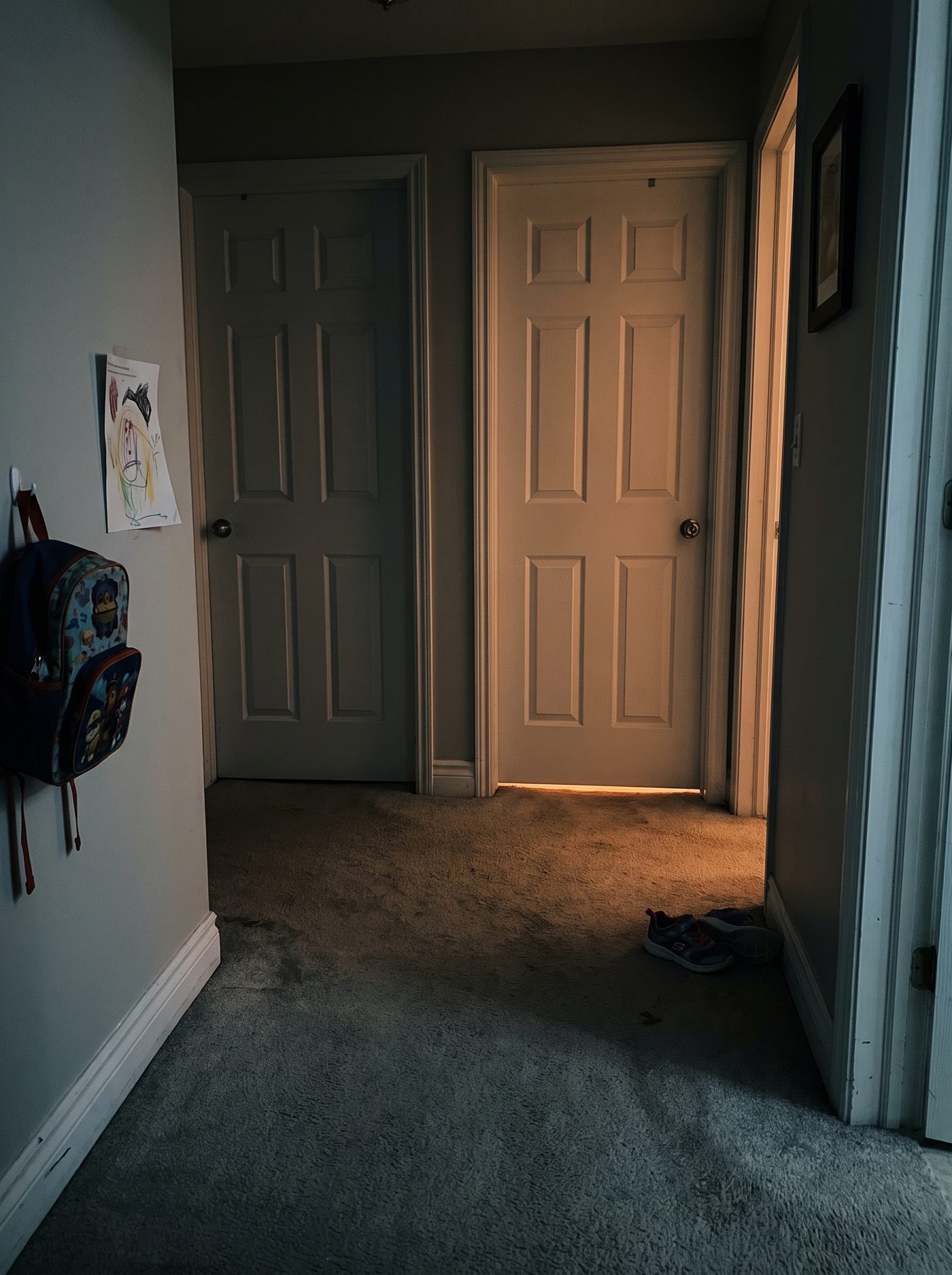
Both doors closed. The whole house actually quiet. Nobody calling out. Nobody paying for the other one's comfort. Both kids getting exactly what they need, in the same room, at the same time.
That used to feel like luck to me, a rare good night I stumbled into and couldn't count on. I'd get one and think, don't get used to it.
Now it just looks like a Tuesday. Ordinary. Unremarkable. Nobody lost. And a week from now, that could just be how bedtime goes at your house too, not a fluke you got away with, just Tuesday.
Every night you wait is another night someone in that room loses.
Here's the only urgency I'll give you, because it's the honest one.
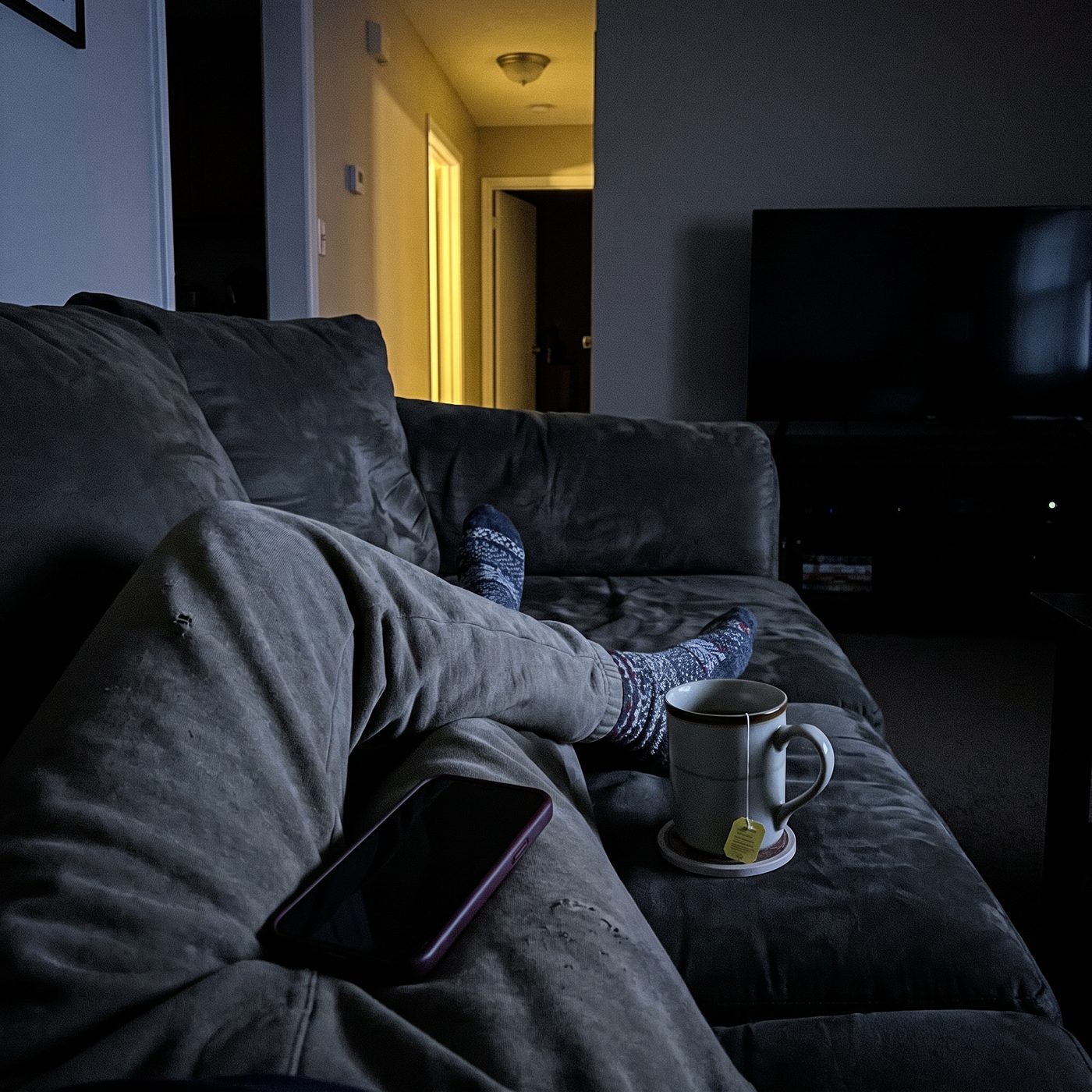
There's no countdown on this. Nothing's going to sell out from under you tonight. But there's a real cost to waiting, and you already know it, because you live it: every night you keep doing it the old way is another night one of your kids pays for the other one's sleep, and another evening you spend in the doorway instead of on your couch.
The trial means the only thing standing between you and finding out is the decision to try. If it doesn't work, you've lost nothing, you send it back. If it does, the fight you've been having every night for months is just… done. The question isn't whether it's worth the risk. There isn't any risk. The question is how many more nights you want to keep being the one in the middle.
Have a look, and decide if it fits your house.
Tap the button above to see how it works, how the under-pillow placement sits, what the three built-in sounds sound like, and how the auto-off runs the night so you're not the one managing it at midnight. Something passive to help one kid settle without costing the other one their sleep, not another thing for you to run.
P.S., If you take one thing from this: the reason no volume setting ever worked wasn't you, and it wasn't the sound. It was that the sound was coming from the wrong place. Move the source to where your child already is, and the fight over where the sound goes simply stops. Both doors closed. Just a Tuesday.